01
Planet-forming disks
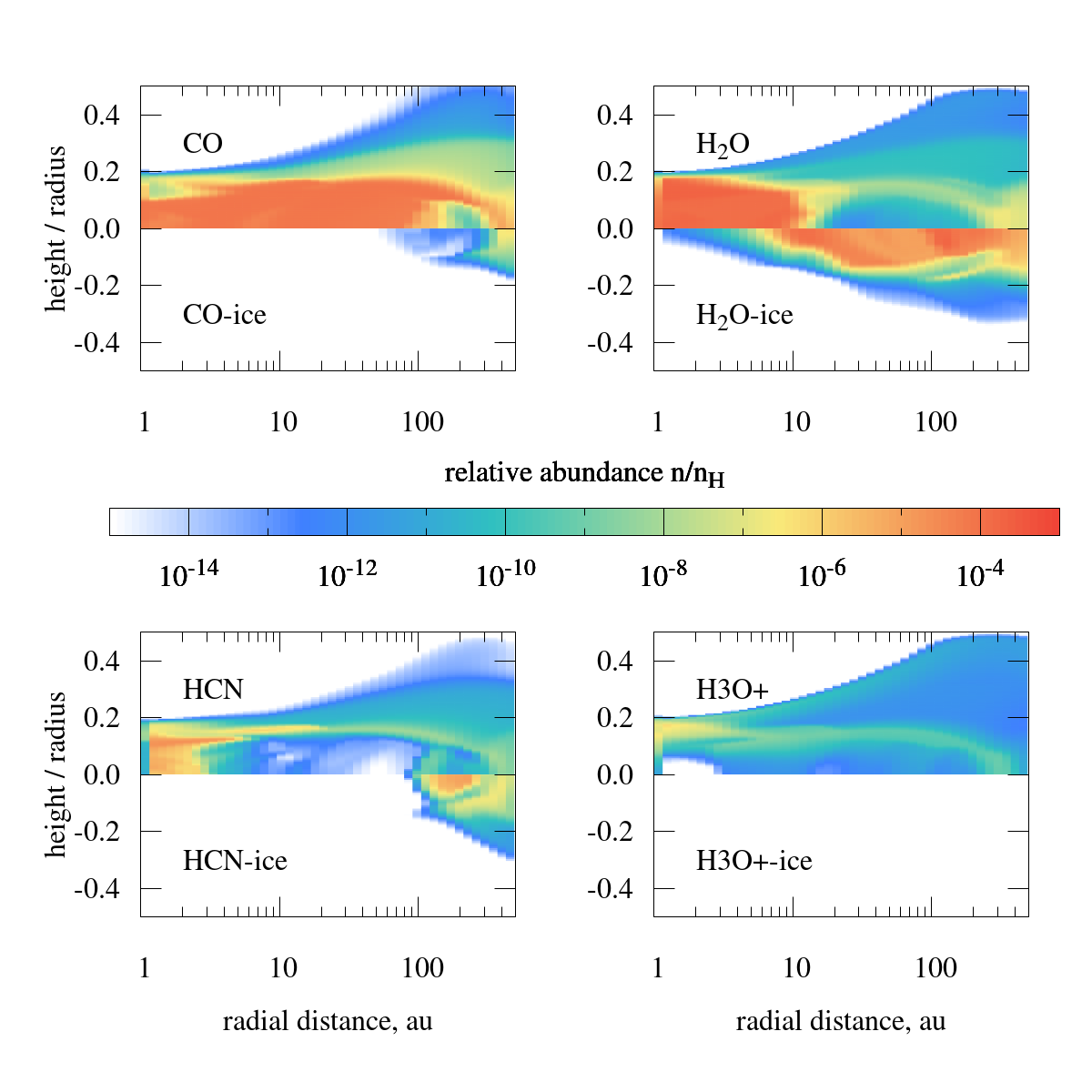
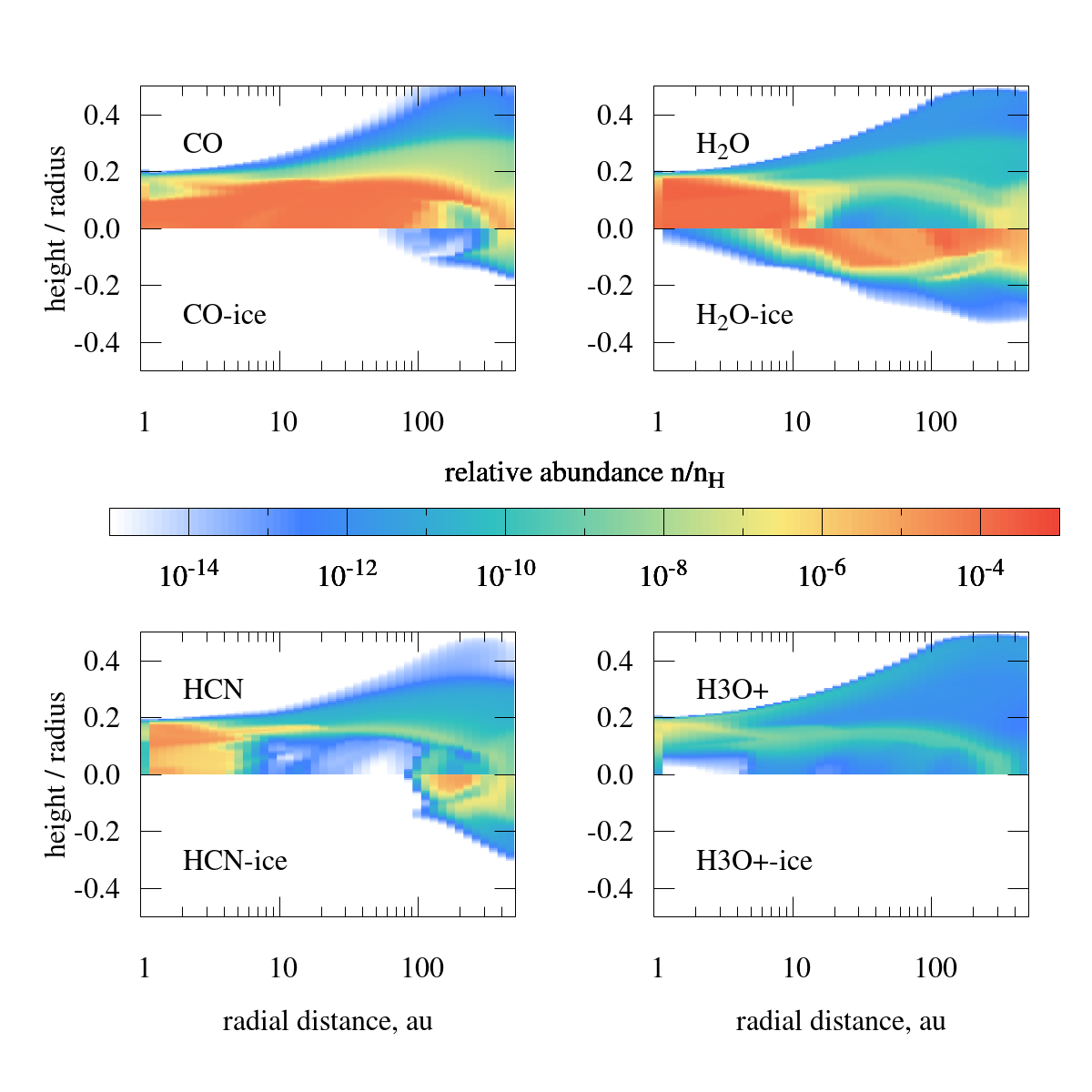
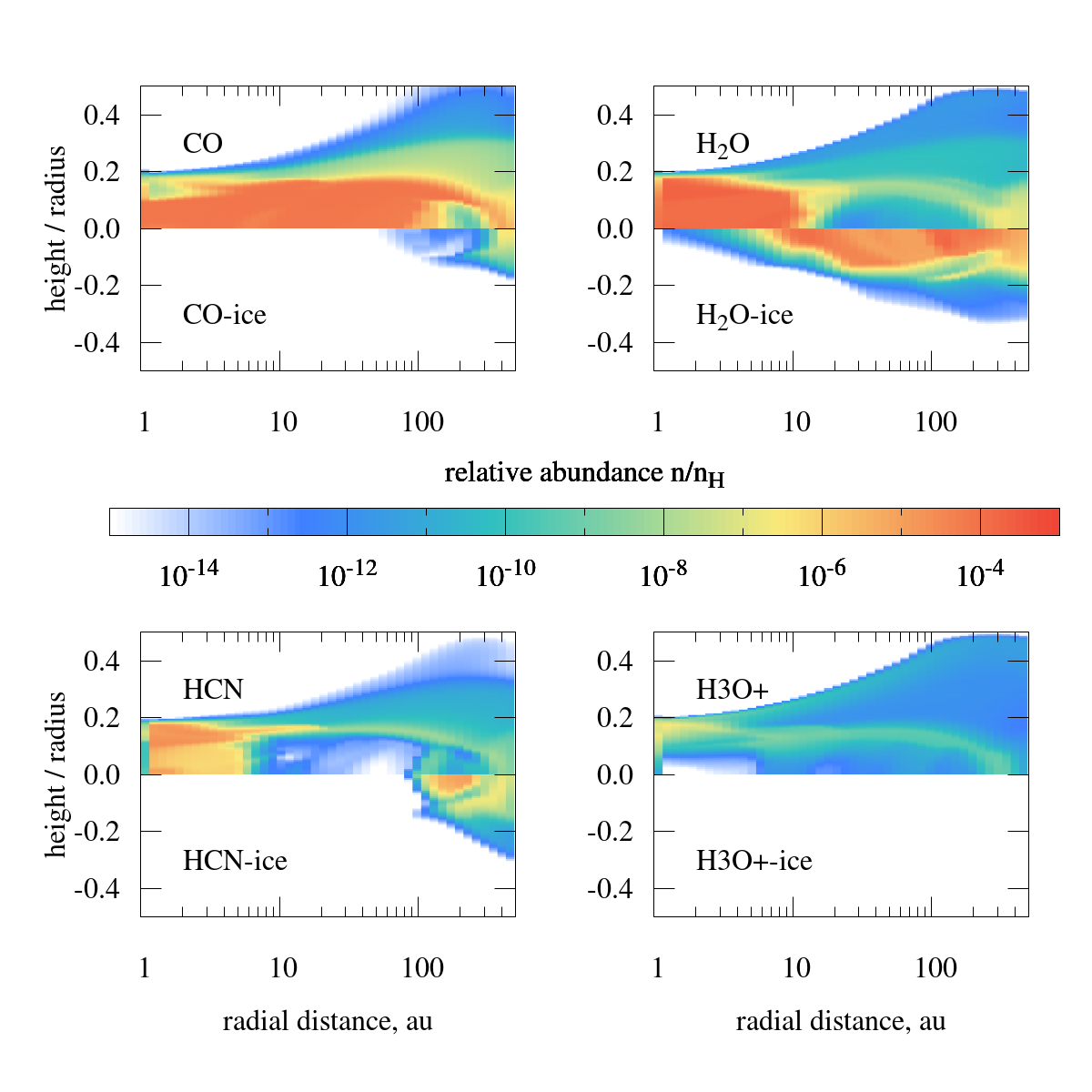
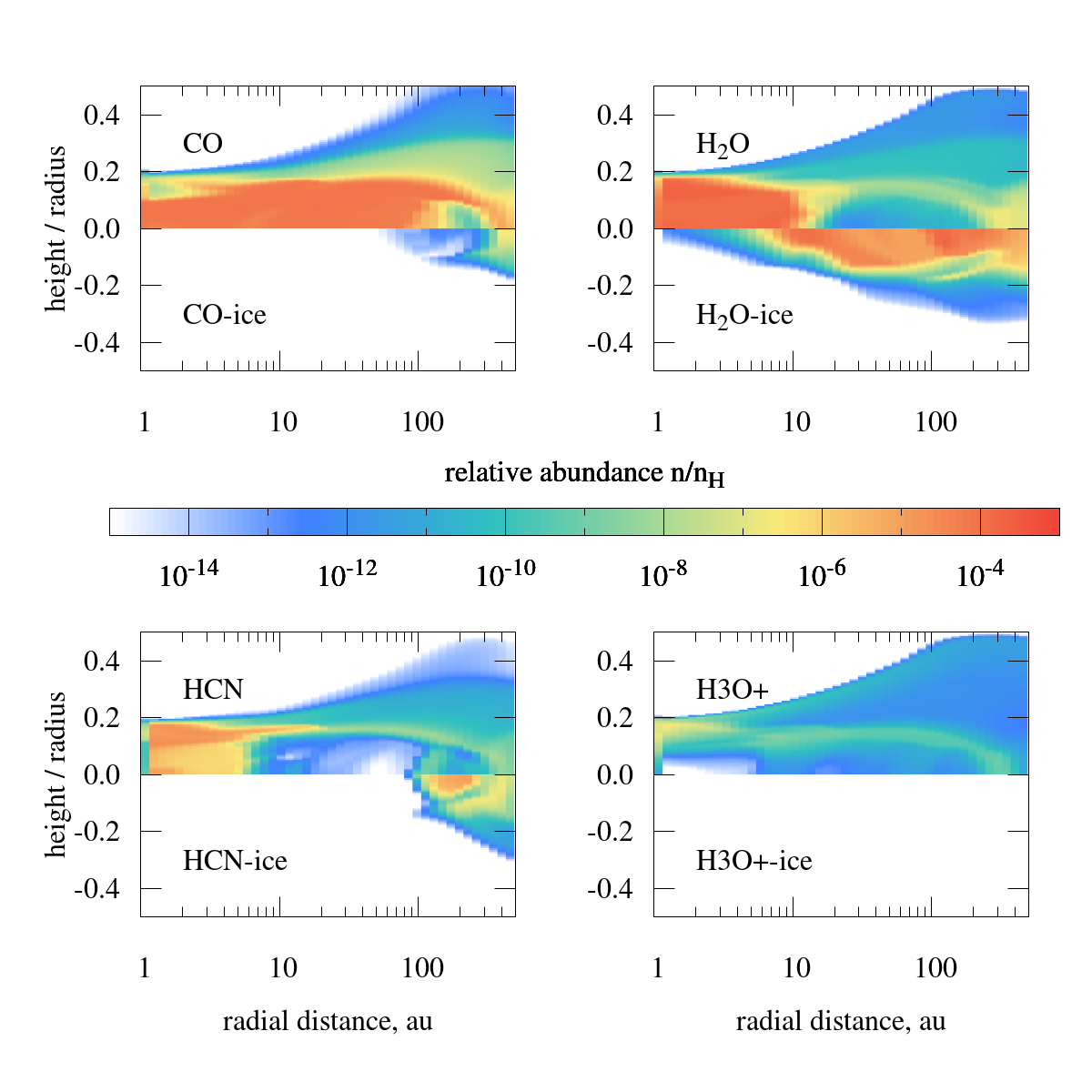
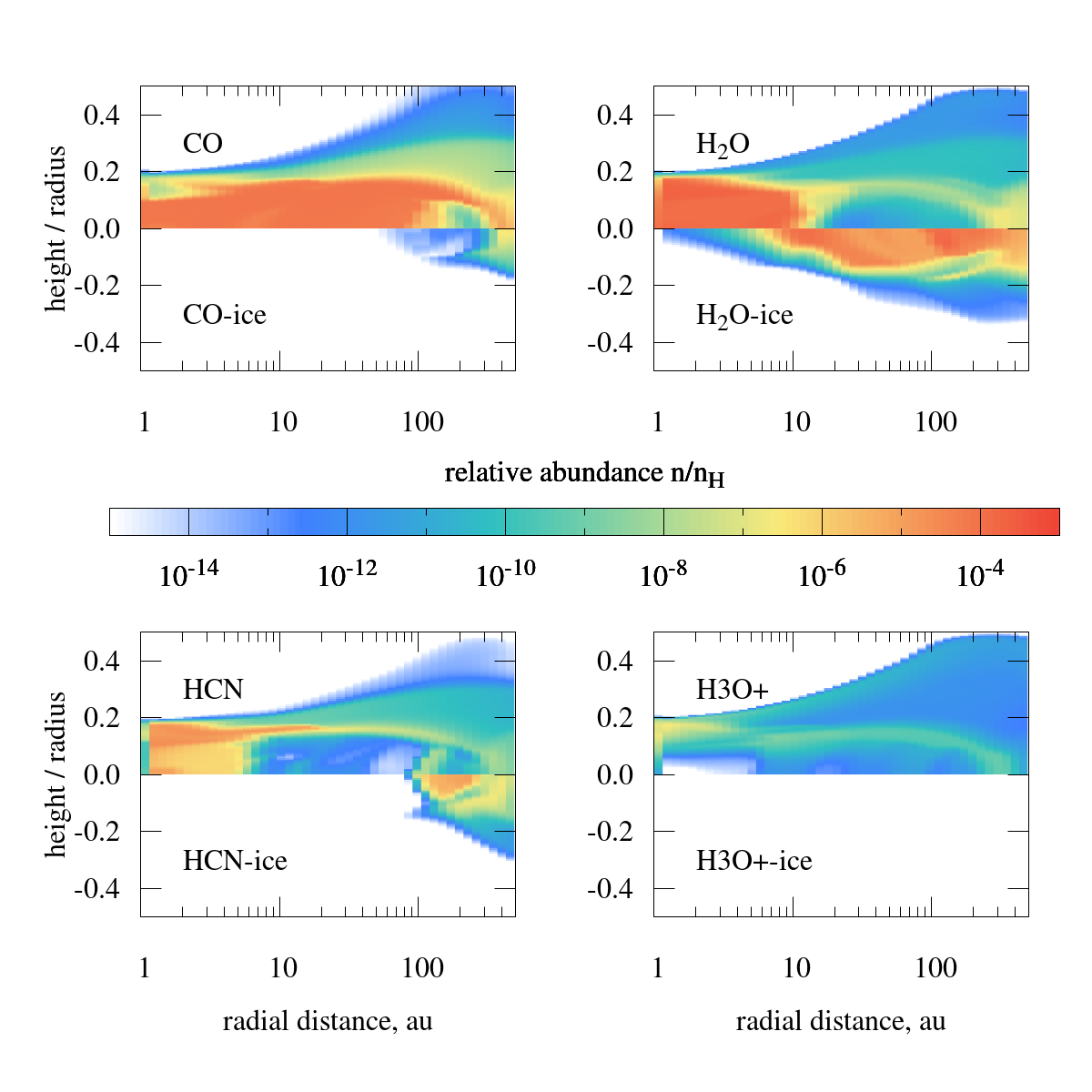
Chemical evolution of the solar nebula and protoplanetary disks, including the physical processes controlling molecular abundances and distributions.
I study how chemistry evolves from molecular clouds to planet-forming disks — and how the molecular inventory of young planetary systems may connect to the origins of prebiotic chemistry.
I am a guest scientist at the Max Planck Institute for Astronomy in Heidelberg and a senior post-doc researcher at the ZAH / Institute for Theoretical Astrophysics at Heidelberg University.
My work combines astrochemical modeling with infrared and radio observations to understand the physical and chemical evolution of star-forming regions and protoplanetary disks.
I develop numerical models and tools for disk chemistry, reaction networks, and observational interpretation, with a particular interest in complex organic molecules and chemical inheritance.
Coupled evolution of matter, radiation, and chemistry during the formation of stars and planetary systems.
Chemical evolution of the solar nebula and protoplanetary disks, including the physical processes controlling molecular abundances and distributions.
Isotopic fractionation, surface chemistry, ice evolution, and the chemical inheritance of forming planetary systems.
Interferometric and single-dish observations at (sub-)millimeter wavelengths and the interpretation of molecular emission as a diagnostic of disk physics and chemistry.
Formation and evolution of simple and complex organic molecules in space and their possible links to prebiotic chemistry.
A gas–grain astrochemistry framework and benchmark resources for chemical evolution in astrophysical environments.
Chemistry benchmark between two gas-grain codes →Reduced reaction network for modeling ionization and chemistry in disks.
Rednet →The Heidelberg–Jena Database of Optical Constants for astrophysical materials.
Opacity database →A compact view of the main stages in my research career, teaching, grants, and community activity.
Doctoral work on dust and gas in protoplanetary discs.
PhD awarded in 2005 · supervisor: Thomas HenningPostdoctoral research on disk chemistry, astrochemical modeling, molecular observations, and the development of ALCHEMIC.
Granted PI observing time at IRAM/PdBI/NOEMA and later ALMA.Annual lecture course in molecular astrophysics and astrochemistry.
Teaching with Holger Kreckel and collaborators.Co-recipient of the Cozzarelli Prize for one of the best PNAS articles of 2017.
Research on protoplanetary-disk physics and chemistry, large observing programmes, supervision, and international collaborations.
Principal investigator of an individual DFG grant focused on the new observational era for planet-forming disks.
SE 1962/7-1Continuing research on astrochemistry, disk evolution, and molecular diagnostics while maintaining close links with MPIA.
A recent study framing AB Aur as a key system for understanding multiple facets of disk structure and planet formation.
A recent example of work connecting physical gas flows, structure formation, and chemically relevant environments.
Your public NASA ADS library remains the canonical destination for the full, current, and curated publication record.
This feed queries Crossref for works registered with my ORCID and sorts them by publication date. Because ORCID metadata are not present in every publisher deposit, my public NASA ADS library remains the complete bibliography.
Together with PD Dr. Holger Kreckel (MPIK) and Dr. Caroline Gieser (MPIA), I teach astrochemistry and molecular astrophysics at Heidelberg University, with course material covering the physics, chemistry, and observational diagnostics of molecules in space.
Ruprecht-Karls-Universität Heidelberg · Zentrum für Astronomie · Institut für Theoretische Astrophysik · Albert-Ueberle-Str. 2 · 69120 Heidelberg · Germany
Max Planck Institute for Astronomy · Königstuhl 17 · 69117 Heidelberg · Germany